

Phishing pages are designed to create urgency and familiarity. They may copy a colour scheme, game screen, help-centre article, support avatar, or promotion. Some can even appear near a genuine result in search, social media, or advertising. The useful question is therefore not whether a page “looks official”; it is whether you independently confirmed the destination, the requested action, and the identity of the service that receives your information. A careful check takes minutes and can prevent loss of credentials, money, identity documents, or account access.
Begin with the address, not the page design
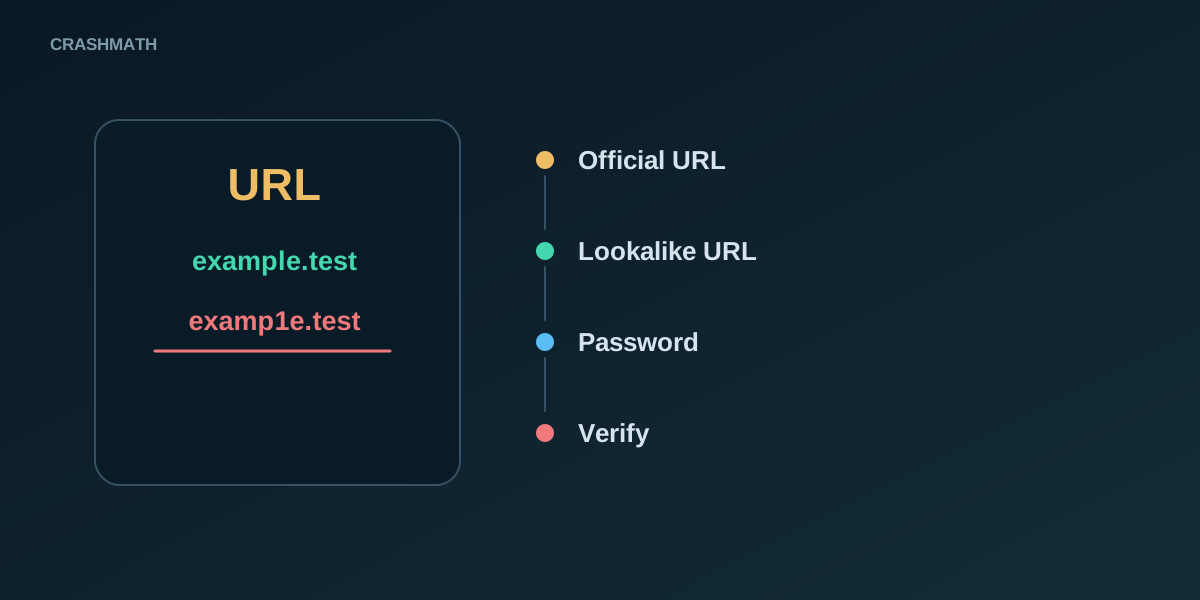
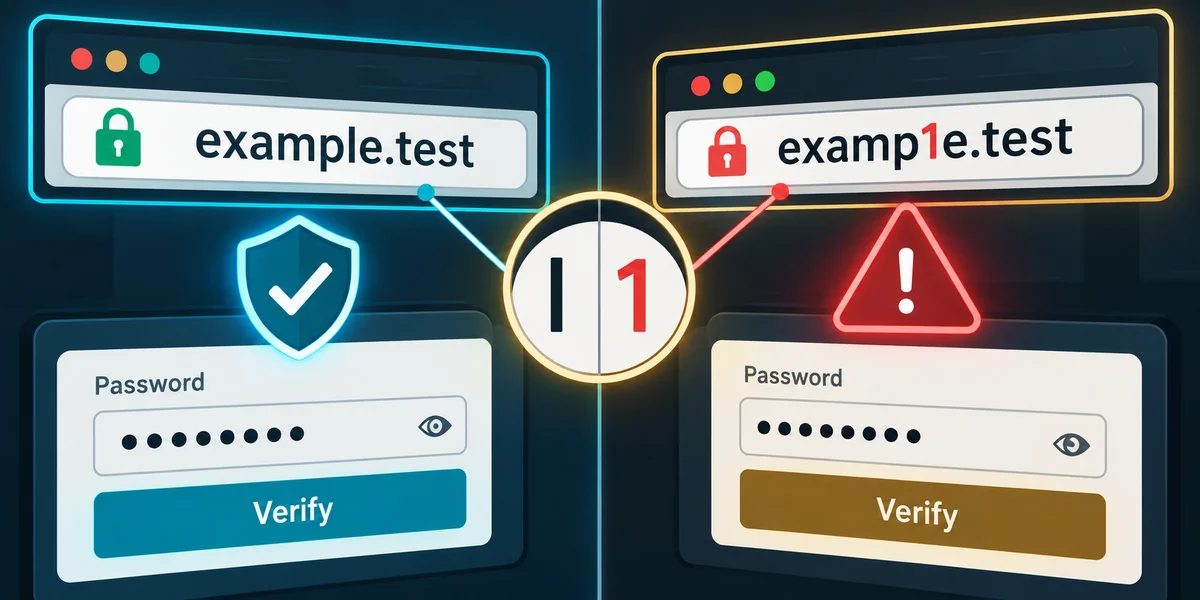
Read the complete domain in the browser address bar before signing in. Attackers often use a familiar word as a subdomain, a misspelling, an extra word, a different top-level domain, or visually similar characters. In brand.example-login.com, the registered domain is example-login.com, not brand. A secure padlock says the connection is encrypted to that domain; it does not say that the domain belongs to the business you intended to reach.
Use a bookmark created after an independent check, or type a known address yourself. Do not make a social-media profile, a chat message, a sponsored result, or a forwarded promotion your source of truth. If you have an existing account, open the known site first and look for the promotion, notice, or support request inside the signed-in area. If the claimed message is absent, contact support through the address published there rather than replying to the sender.
Check how the link reached you
Unexpected urgency is a common phishing signal. Messages may claim that an account will close today, a withdrawal needs an immediate fee, a bonus expires in minutes, or a security review requires an instant click. A legitimate service can send notices, but urgency does not remove your need to verify the route. Pause, copy the displayed address without opening it if possible, and access the account through your own bookmark.
Be especially cautious with links in direct messages, comment replies, groups, email forwards, shortened URLs, QR codes, and advertisements. These channels can be useful for discovery but they do not authenticate the destination. A copied support profile and a verified-looking badge can be misleading. Confirmation must come from a domain and contact route you independently know, not from the message asking you to act.
Protect your login from lookalike forms
A password manager is a practical phishing control. It usually fills credentials only on the domain where you saved them. If it refuses to fill a familiar login, stop and compare the address rather than manually entering the password. Use a unique password for every gaming, email, and payment account. A reused password turns a single fake page into a broader account-takeover risk.
Enable available multi-factor authentication on the real account. The second factor helps only when you keep its code private. No legitimate support person needs your password, one-time code, recovery code, hardware-key response, or a confirmation prompt from your phone. A request to read back a code “to cancel a withdrawal” or “to prove ownership” is an attempt to use your login in real time.
Recognise unsafe payment and recovery requests
A page can copy a cashier screen as easily as a login form. Do not enter card data, bank credentials, cryptocurrency recovery phrases, or wallet private keys after following an unverified link. A genuine payment process does not need your card PIN, card CVV sent through chat, banking password, or wallet seed phrase. It also does not require you to transfer money to “unlock” a withdrawal, verify a wallet, or prove that an account is yours.
Remote-access software is another hard stop. If a person asks you to install a screen-sharing program so that they can help with a payment, a game, or verification, end the conversation. The person could view credentials and authorise actions. Contact the bank, card issuer, wallet provider, or gaming service using the contact method already saved in your app or official account. Do not use a telephone number or chat button supplied by the suspicious page.
Inspect promotions and downloadable files
Fraudsters often offer an “exclusive” calculator, prediction tool, bonus code, mobile installer, or account recovery application. Treat downloadable files and browser extensions as software, not as harmless marketing. Install nothing from a message or unfamiliar page. Official mobile applications should be found through the developer listing in the appropriate store and then cross-checked with the service’s own verified help material. Do not bypass device warnings to install a file from an unknown source.
A promotion can be genuine and still have terms that matter. Verify the exact offer in the authenticated account or current terms page, including eligibility, expiry, wagering or use conditions, and country limits. Never use a promotion as a reason to share a login, send a document through chat, or make an unplanned payment. A screenshot is not a contractual record and can be altered easily.
Do not mistake game graphics for technical proof
A cloned game screen, a round history, or a “fairness verified” badge does not prove that a page is connected to the service it imitates. If a game publishes provably-fair material, evaluate that material only after you have independently confirmed the domain. Then check whether the site exposes a pre-round commitment, disclosed inputs, a documented formula, and a reproducible completed-round record. Even a successful mathematical reproduction has limited scope: it does not confirm licensing, custody of funds, customer support, or future outcomes.
Do not connect a wallet or approve a browser transaction merely to test a game, claim a reward, or activate a verifier. Read the requested transaction in the wallet itself. If you do not understand the permission or destination, reject it. A technical check should reduce uncertainty; it should never require access that is irrelevant to the check.
Respond quickly if you suspect a phishing attempt
If you only viewed a suspicious page, close it and avoid interacting with further prompts. If you entered a password, change it from the genuine site immediately and use a new unique password. End active sessions, review multi-factor settings and recovery addresses, and check recent account activity. If the same password is used elsewhere, change those accounts too, beginning with the email address that can reset them.
If you entered card or bank details, contact the issuer using a trusted number or banking app. If you exposed a wallet recovery phrase or private key, move remaining assets to a new wallet whose recovery information was never shared; seek reliable specialist assistance if needed. Keep screenshots, the page address, messages, transaction references, and timestamps for a report. Do not send more data to the attacker in an effort to “reverse” the incident.
Use a simple, repeatable checklist
- Open the service from a verified bookmark or independently typed domain.
- Read the full domain, not only the logo, page title, or padlock.
- Confirm unexpected notices inside the authenticated account.
- Never disclose passwords, one-time codes, CVV, PINs, recovery phrases, or remote access.
- Verify payment, document, and download requests through a trusted channel before acting.
- Save evidence and contact the genuine service, payment provider, or regulator when a concern remains.
CrashMath does not operate login pages for gaming services, receive payments, recover accounts, or ask for identity documents. This guide does not approve websites or certify operators. It gives you a process for limiting trust to evidence you can independently check and for stopping when a request asks for more access than its stated purpose requires.