
Crash Game Mathematics Library
Articles, guides, and data analysis on crash game probability, strategies, and provably fair verification.
Choose a platform
Partner links

Offers and availability depend on your country and account. Check the current terms on the operator’s site.

What Is a Crash Game? Accepted Bets, Payouts and Model Assumptions
Understand the wager states, gross versus net, shared flights and an explicitly declared probability model. Verification, budget choices and account terms stay separate.
Foundational Knowledge Clusters
Structured quantitative learning pathways from cryptographic proofs to bankroll survival.
Provably Fair & Cryptographic Verification Architecture
Foundational investigations into HMAC-SHA256 generation, server and client seed mathematics, engine audits, and anti-phishing verification protocols.
Expected Value, Dynamic Bet Sizing & Capital Preservation
Mathematical proofs regarding negative EV, the fallacy of negative progressions, optimal cashout thresholds, and multi-bet hedging mechanics.
Empirical Crash Multiplier Distribution & Longitudinal Analysis
Large-scale empirical datasets analyzing multiplier frequency decay, 1.00x instant crash density, streak lengths, and cross-platform technical benchmarks.
Consumer Protection, Anti-Scam Verification & Value Optimization
Rigorous debunking of AI predictors and signal channels, alongside beginner onboarding guides, payment security protocols, and bonus terms breakdown.
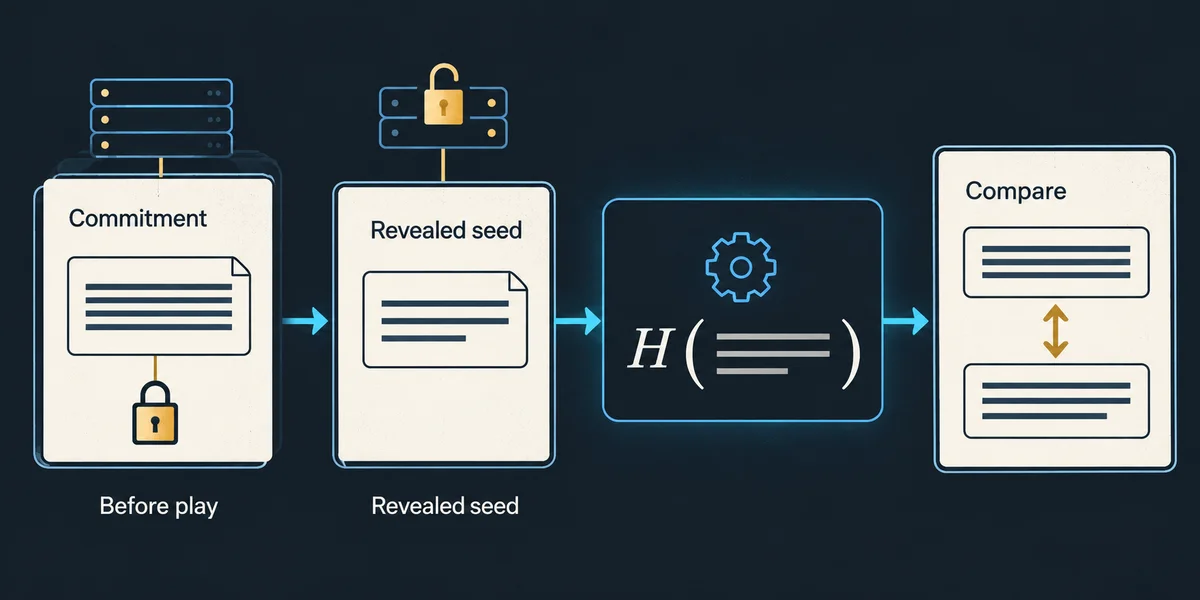
Provably Fair Explained: Commitments, Hashes and Verification Limits
Separate a prior commitment, result reproduction and settlement. Compare game-specific protocols and reproduce a complete educational model without false match or payout guarantees.
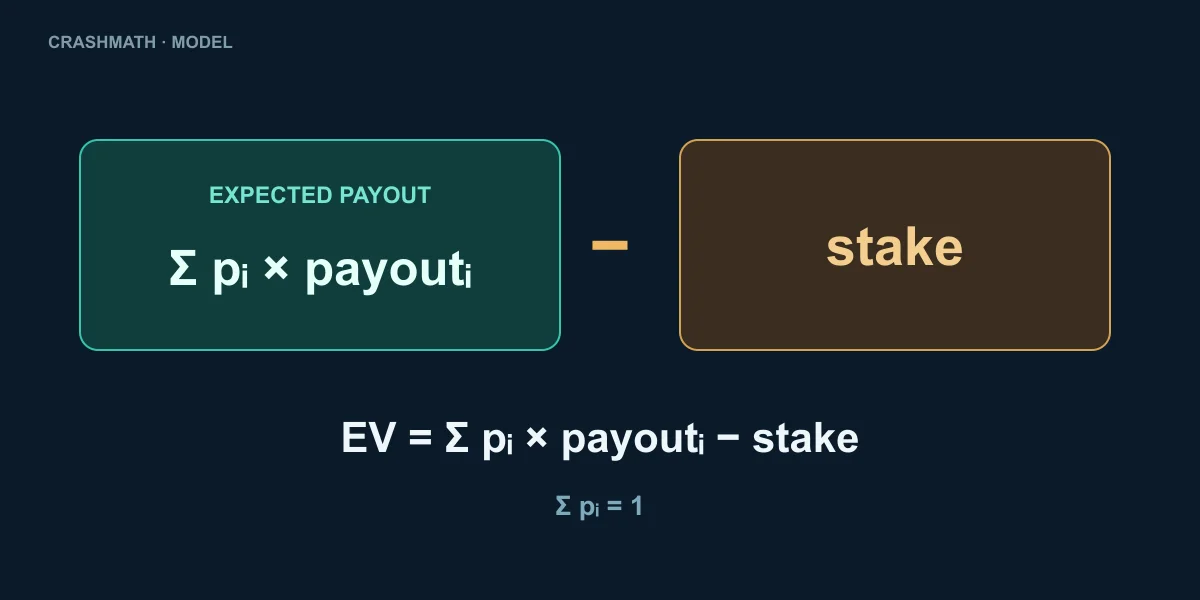
Expected Value in Crash Games: Net Payoffs, Funded Ledgers and Kelly
Derive EV=-E for a declared model, reconcile three funded synthetic ledgers and distinguish zero constrained Kelly from discretionary sizing. Realized RTP is not a guaranteed return.

Why Martingale Cannot Guarantee Recovery: Funding, Caps and Finite Risk
Keep the geometric progression, but check funding before each wager. Reproduce a bounded synthetic model that retains residual capital and separates blocked continuation from zero balance.
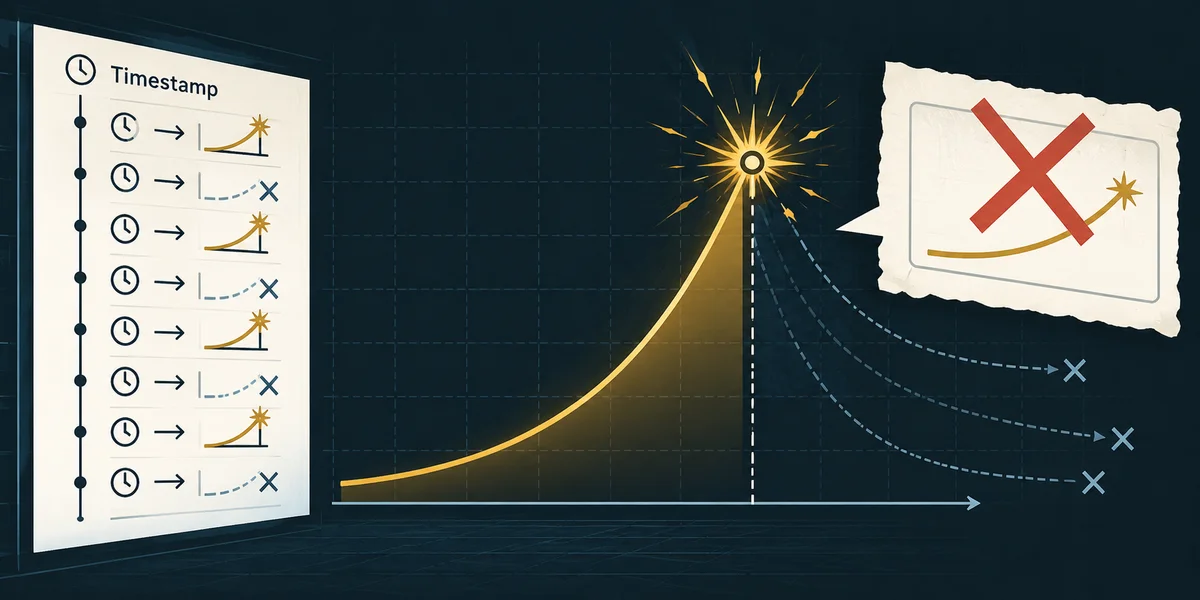
Crash Predictors: Accuracy, Evidence and Scam Claims
Assess predictor claims by target, payoff and complete advance records. High accuracy can still lose money; affiliate codes and network visibility do not by themselves prove fraud or foresight.

Lucky Jet vs Aviator vs JetX: Rules, RTP and Shared-Flight Betting
Compare Aviator’s published 97% RTP, Next Level JetX’s four-bet feature, game-specific seed protocols and dependent shared-flight wagers. Mobile performance needs comparable measurements.
What Is a Crash Game? Accepted Bets, Payouts and Model Assumptions
Understand the wager states, gross versus net, shared flights and an explicitly declared probability model. Verification, budget choices and account terms stay separate.

Crash Game History Patterns: Probability, Streaks and Useful Records
Understand the independent-round assumption, reproduce dry-spell probabilities and use history for records. Small sample tests do not prove all-game independence or a predictive edge.
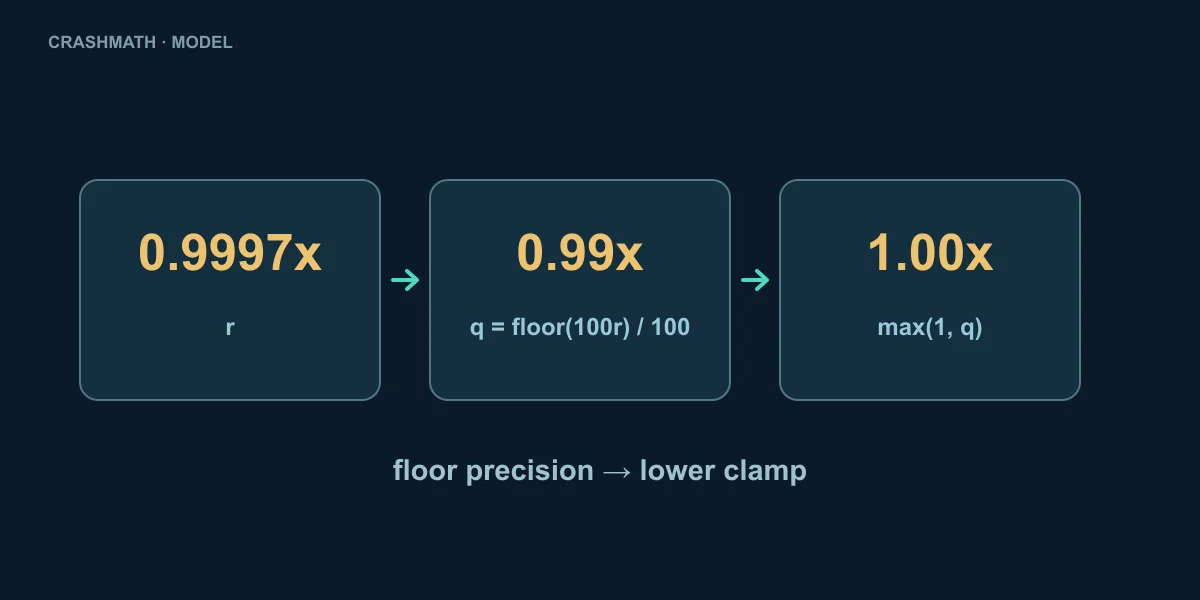
Why Crash Games Show 1.00x: Rounding, Odds and Verification
A 1.00x display is not the house-edge percentage. Reproduce a complete synthetic example, calculate adjacent pairs and recovery paths, and separate result calculation from recorded commitment.

Your First 100 Crash Rounds: Exact Probabilities and a Funded Ledger
Reproduce fixed-target and Martingale examples without invented casino trials. Separate expected counts, realised RTP, funding stops, streaks and peak drawdown.
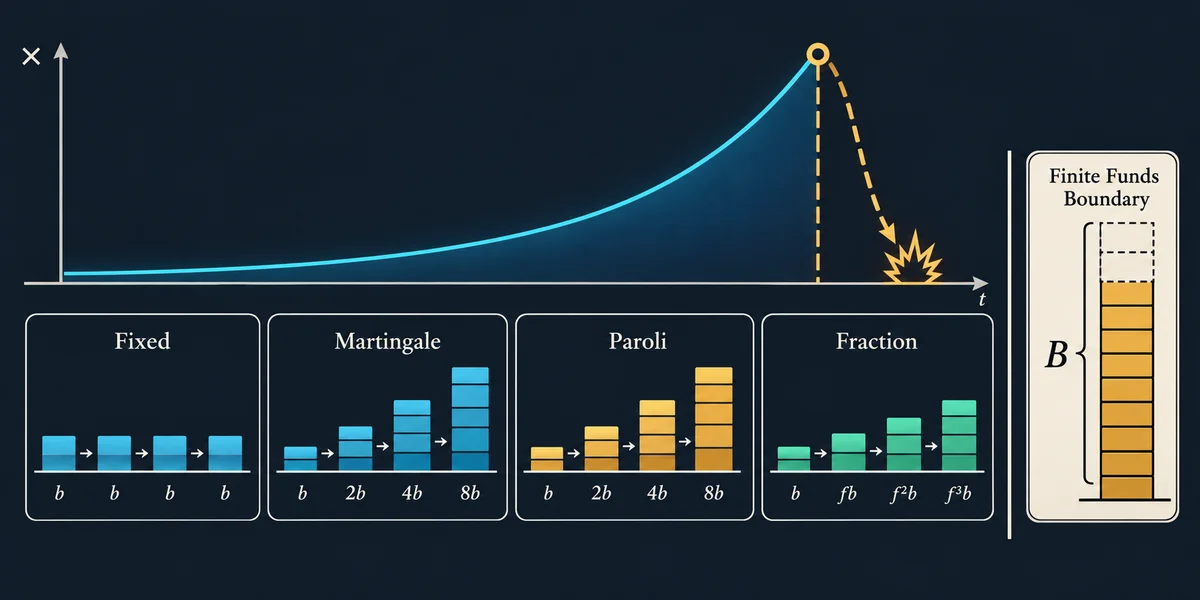
Five Crash Staking Systems: Rules, Funding and a Reproducible Comparison
Compare Martingale, Fibonacci, D’Alembert, Labouchere and pattern entry under explicit limits. Separate blocked continuation from zero, check a flat control and keep protocol claims game-specific.
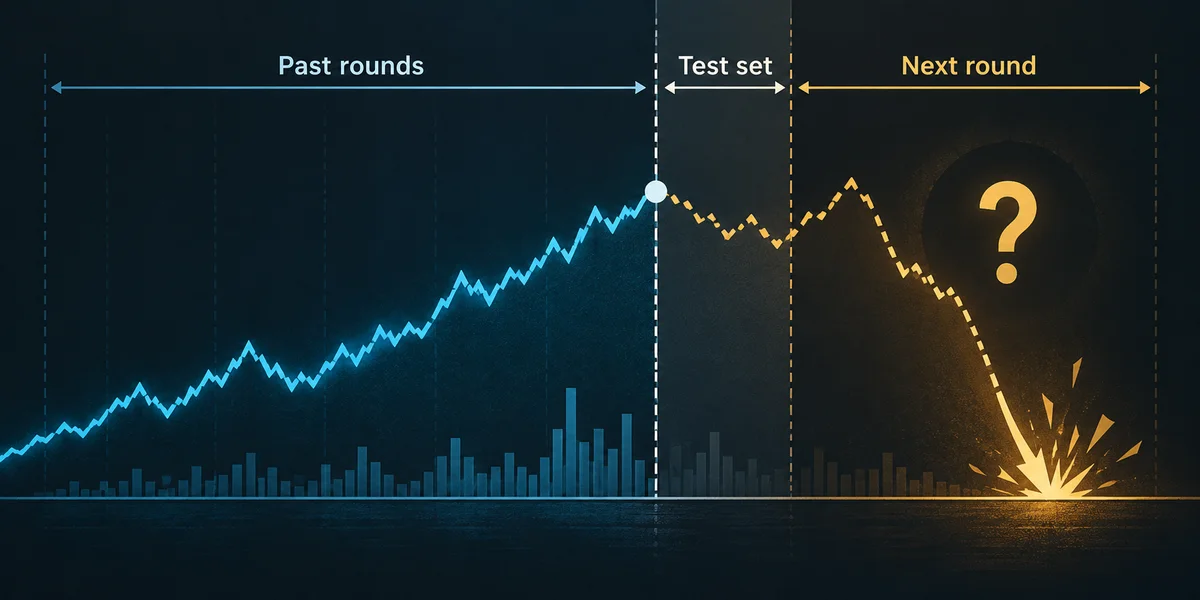
Can You Predict the Next Crash? Synthetic Data and Prediction Tests
Reproduce autocorrelation and runs counts from one public synthetic CSV. Learn why these diagnostics do not prove independence, and what a prospective predictor test needs.

Watching Other Players’ Bets: Same-Flight Information and Future Predictions
A confirmed cashout can reveal a current or past event without predicting the next independent flight. Interpret records, unknown account funding and optional social controls.
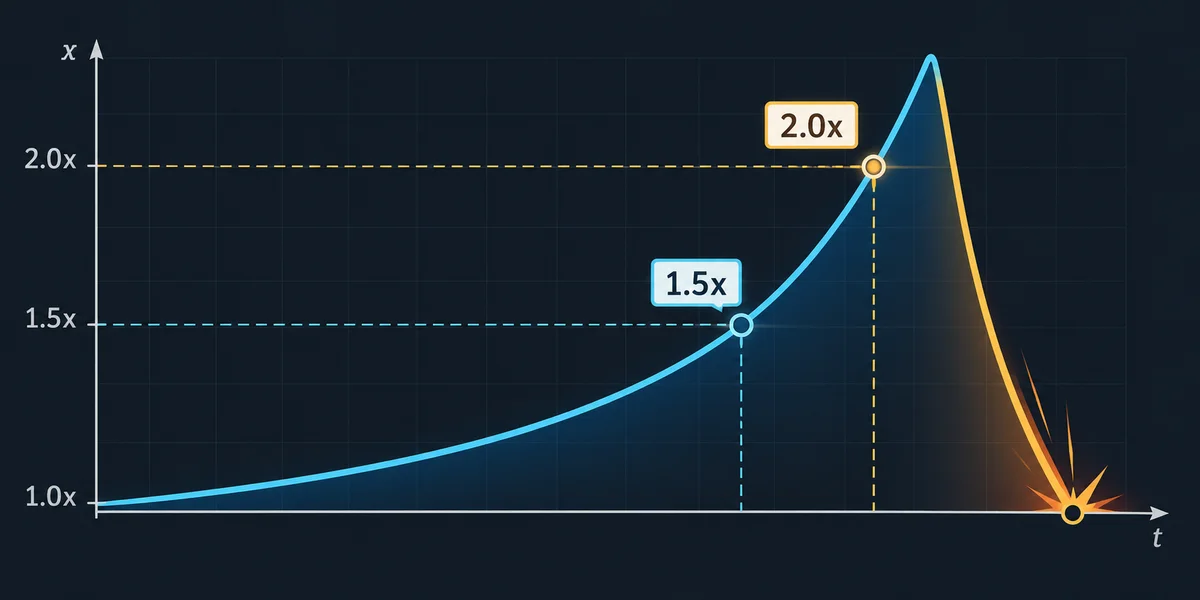
Cashout 1.5x vs 2x: Expected Return, Variance and Finite Risk
Compare equal funded stakes in a declared 3% model. Exact win odds, variance, run probabilities and a reproducible synthetic replay separate frequent wins from guaranteed safety.
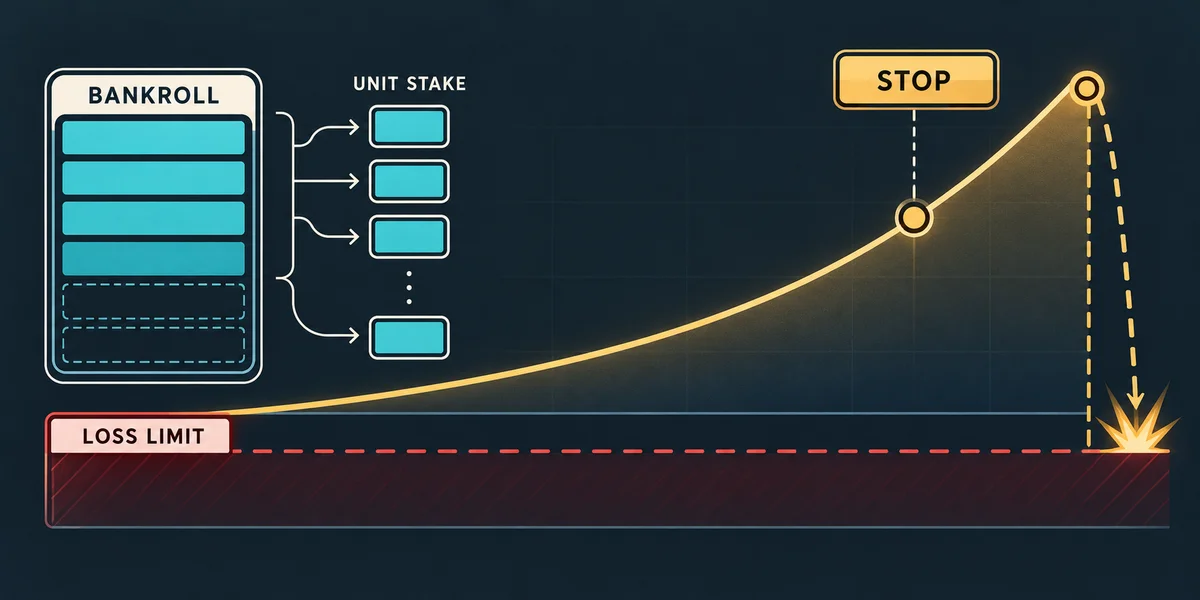
Crash Game Budget: Units, Finite Risk and Stopping Rules
Choose an affordable spending limit before a stake. Reproduce finite-horizon funding risk for a declared model, distinguish fixed units from balance fractions, and avoid treating a larger deposit as safety.

The 1% Rule: Fixed Stakes, Current Fractions and Finite Risk
One percent is a spending choice, not a Kelly profit rule. Compare fixed and current-balance stakes, exact loss-run probabilities and reproducible 500-round cutoff and drawdown models.

When to Stop Playing Crash: Spending Limits and Session Exit Rules
Set chosen loss, profit and time boundaries without invented optimal percentages. Check pending bets, recovery arithmetic and net results including transfers.
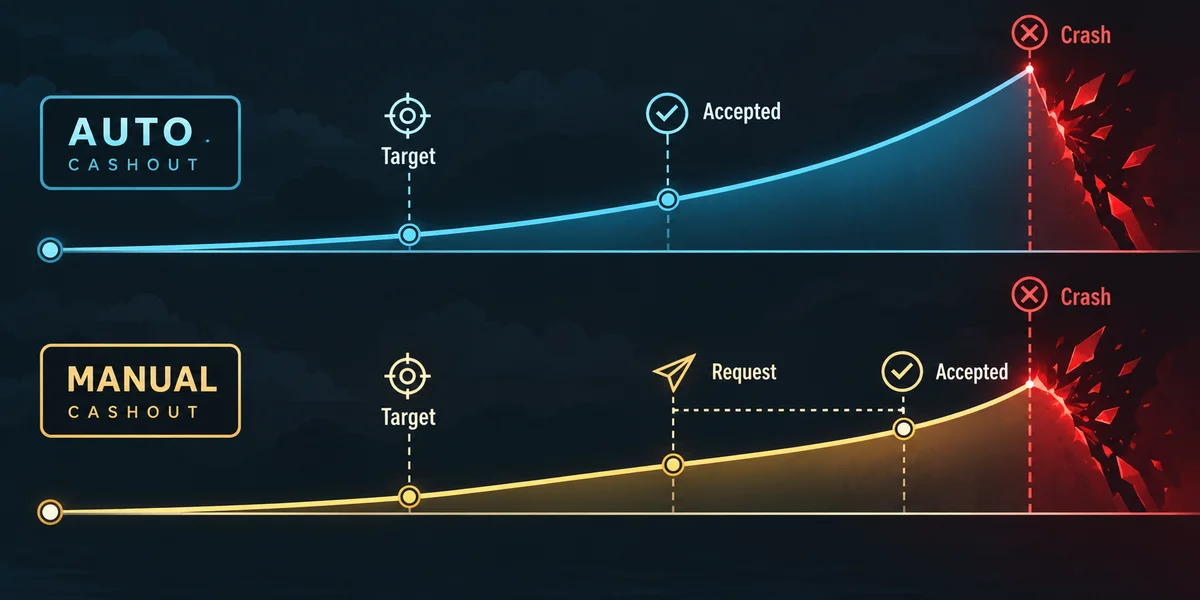
Auto vs Manual Cashout: When Delay Changes Expected Return
Compare fixed-target and arrival-multiplier payments before assigning a latency cost. Reproduce three synthetic replays, reconcile the ledger and understand the conditional 7/3 split.

How to Check a Crash Round: Inputs, Commitments and Result Comparison
A practical sequence for preserving evidence, selecting the correct protocol and comparing exact inputs. Complete synthetic Node and Python examples agree; a calculation alone does not certify a casino.
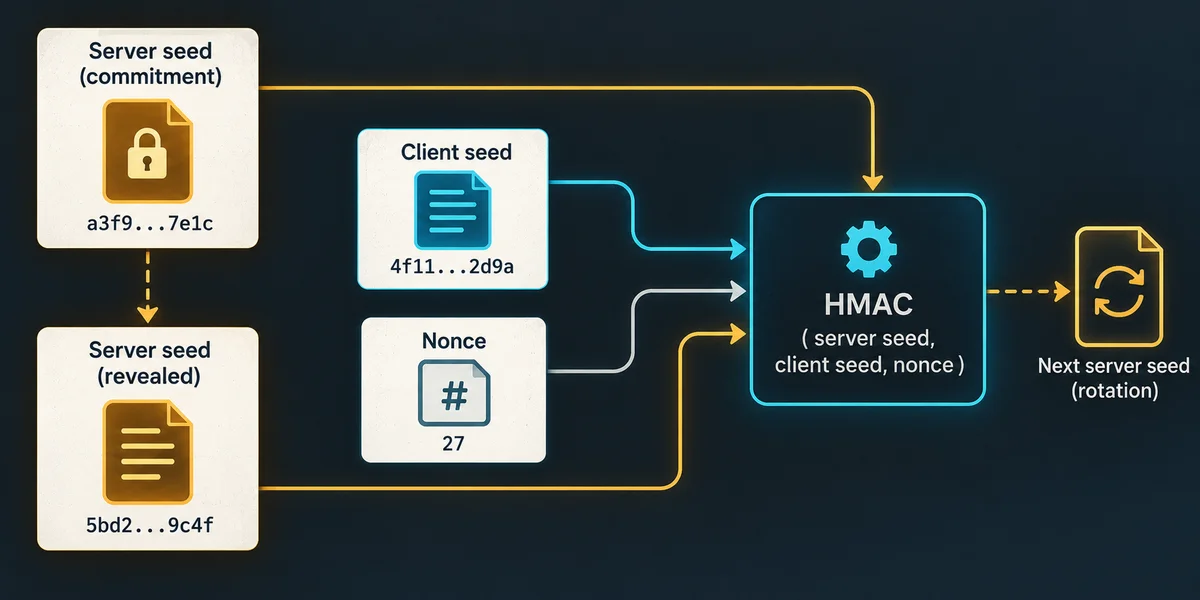
Server Seed, Client Seed and Nonce: Inputs, Encoding and Rotation
Understand seed roles, literal UTF-8 inputs, nonce scope and rotation. Complete synthetic controls show why different hashes can produce the same rounded multiplier.

RNG and Provably Fair: What Each Check Establishes
Compare generation, commitments, mapped outcomes and settlement. Reproduce a matching seed with a mismatched multiplier and read scoped British testing requirements.
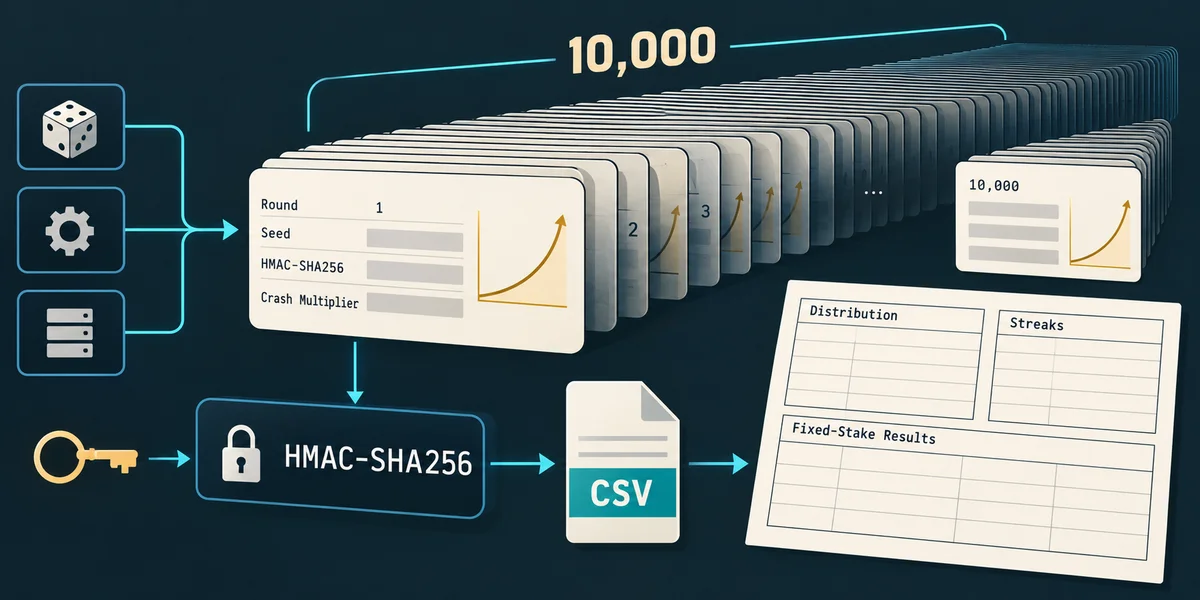
10,000 Simulated Crash Rounds: Distribution, Streaks and Fixed-Stake Results
A reproducible analysis of the public synthetic HMAC-SHA256 CSV: 396 results at 1.00x, median 1.88x, maximum 4,109.28x and fixed one-unit ledgers. These are not recorded Aviator or casino rounds.

10x, 50x and 100x Frequency: Waiting Times, Synthetic Data and Full Payouts
Keep geometric probabilities separate from a reproducible synthetic 10 k file. Compare drought definitions, funded first-hit policies and all three dual-bet payout regions.

Longest Winning and Losing Runs: Finite Probabilities and Funded Limits
Exact finite run recurrences, numerical mean longest runs and an identified synthetic history. Separate overlapping windows, progression blocking and eventual gambler’s ruin.

Crash Round Duration: Target Time, Shared Flights and Actual Turnover
Reproduce a hypothetical exponential curve and full-cycle mean. A personal cashout does not start the next shared round; measure accepted turnover and clocks separately.

Monthly Crash Variance: Valid Profit Tails and Reproducible Funded Paths
Keep valid binomial profit probabilities and inspect a funded synthetic cohort. Separate calendar time, turnover, variance, selection and money left unbet.

How to Identify Gambling Phishing Sites and Protect Your Account
A practical way to check domains, messages, logins and payment requests before sharing information with an online gaming service.
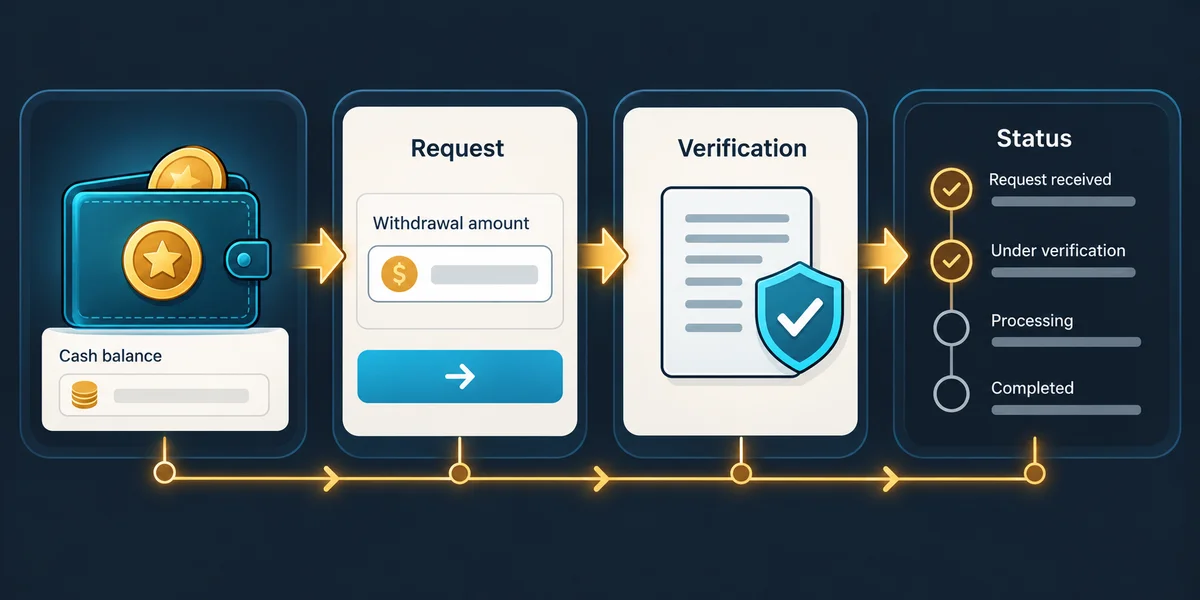
How to Withdraw Lucky Jet Winnings: Cash Balances, Requests and Verification
Separate cash, bonus and pending bets before requesting a payout. Check actual fees, destination, identity requirements and receipt without a universal playthrough rule.

Lucky Jet on Android and iPhone: Web Access, Home-Screen Apps and Package Checks
Compare mobile web, home-screen access and optional apps using current Apple, Google and WebKit documentation. No untested package safety or performance guarantee.

How to Play Lucky Jet: Controls, Accepted Bets and Bankroll Examples
Read stake and cashout controls, distinguish fixed stakes from changing fractions, and calculate conditional dual-bet payments without a guaranteed-safe deposit rule.
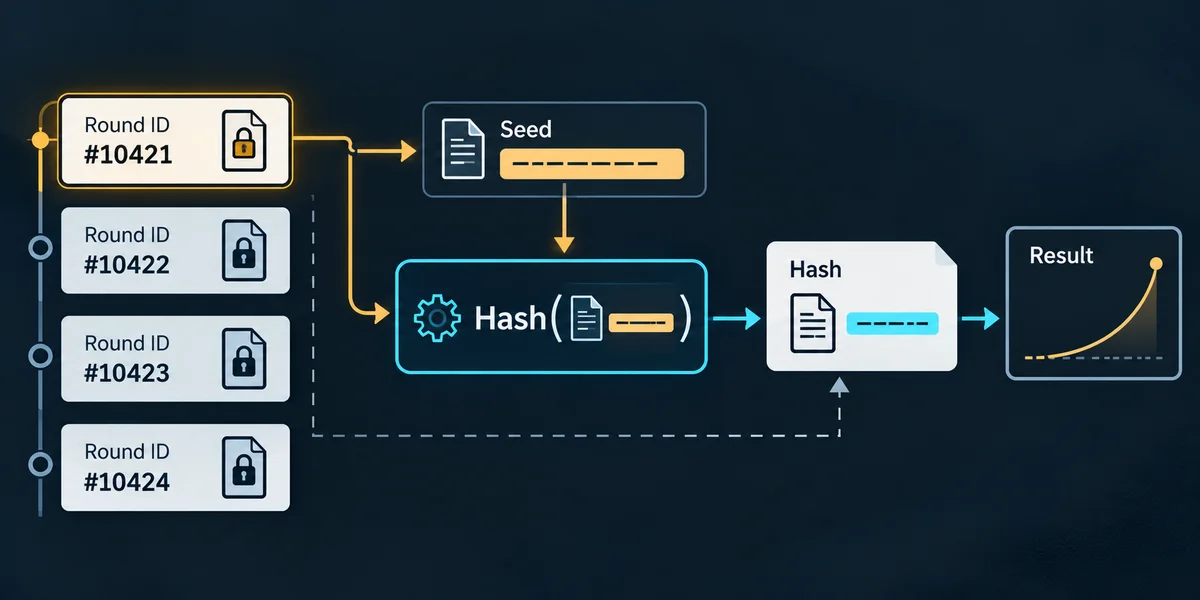
How to Verify Provably Fair Crash Rounds: Hashes, RTP and Network Evidence
A practical method for reproducing a crash round from disclosed inputs, assessing a published RTP model, and recording evidence without treating a technical check as an operator endorsement.

Lucky Jet Promo Codes: Read Deposit Stages, Bonus Release and Withdrawal Terms
The advertised 500% package spans four deposits. Separate current offer terms from hypothetical release maths, promotional reserves and personal cash.

Lucky Jet Demo Guide: Controls, Virtual Balances and Evidence Limits
Learn what an available Lucky Jet demo can show, how to count stake units and why virtual results do not establish cash-game parity, guaranteed survival or a reason to deposit.

Best Time for Lucky Jet? Evidence Needed for Paying-Hour Claims
No verified paying-hour schedule is demonstrated here. Separate independent-round exposure, timestamped evidence, statistical uncertainty and actual cashout execution.

Lucky Jet Double Bets: Conditional Coverage, Variance and Finite Funding Risk
Calculate the 2:1 split at 1.5x/3x, account for shared-flight covariance and rounding, and reproduce a funded model plus one synthetic replay.

Online Gaming KYC and Document Safety: A Practical Guide
How identity checks work, how to protect documents during a legitimate review, and which claims should be confirmed directly with the licensed service and relevant regulator.
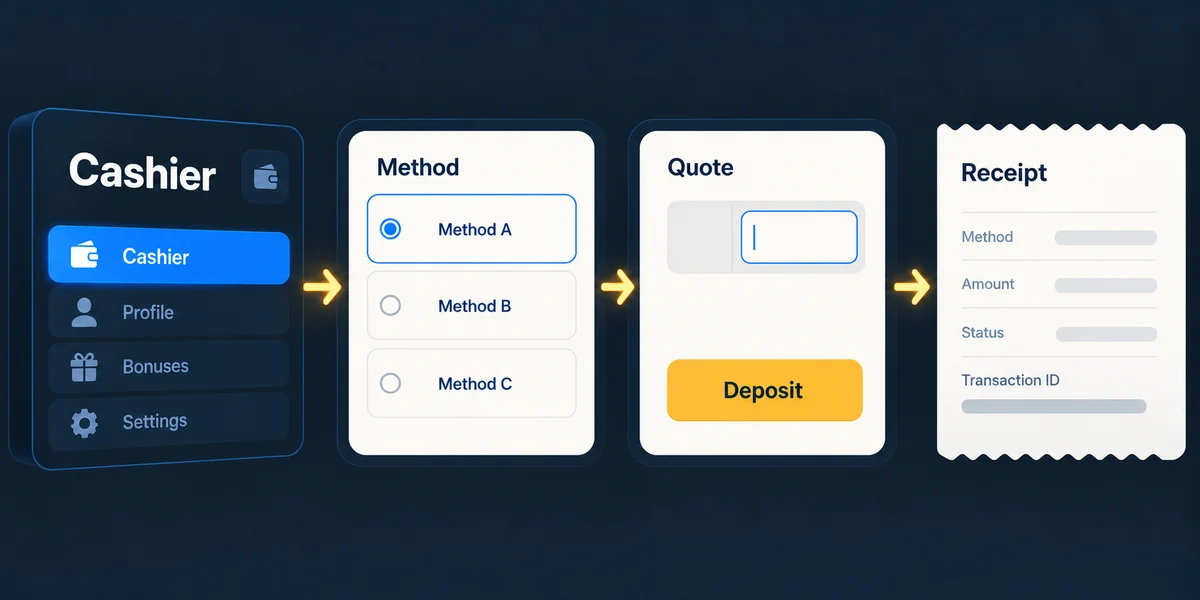
How to Deposit on 1win for Lucky Jet: Methods, Quotes and Payment Checks
Use the actual cashier quote to compare debit, credit, currency and fees. Country-specific rules and matching crypto asset/network matter more than universal speed promises.

Lucky Jet Telegram Signals: Evidence, APK Claims and Real Analytics
How to assess advance signals, selected audiences, APK allegations and affiliate incentives without invented investigations. Understand what CrashMath tools actually calculate.

Crash Games vs Slots: RTP, Player Choices and Funded Bankroll Models
Compare actual game options and verification, then reproduce two declared payout models. Separate fixed turnover from funding stops, terminal variance and product claims.

Seven Lucky Jet Mistakes: Stakes, Cashout and Account Checks
A practical check of progression funding, predictions, accepted cashout, budgets, changes of plan, site identity and bonus eligibility without false guarantees.

1win Cashback and VIP: Eligible Games, Caps and Expected Reward
Read the scoped weekly slots advertisement, verify actual eligibility and reproduce why a capped net-loss rebate differs from a rate times average loss.

Balloon Hold-and-Release: Acceptance, Payout Rules and Two Delay Models
A held control alone does not establish a latency edge. Compare target-capped and arrival-price payouts, distinguish actual title rules and reproduce a synthetic ledger.

Chicken Step Games: Conditional Risk, Rounded Payouts and a Toy Verifier
Separate Chicken Train, Crossfire Chicken X5000 and Chicken Crash. Reproduce a declared step ladder, funded synthetic paths and a mapped educational protocol without claiming a provider audit.
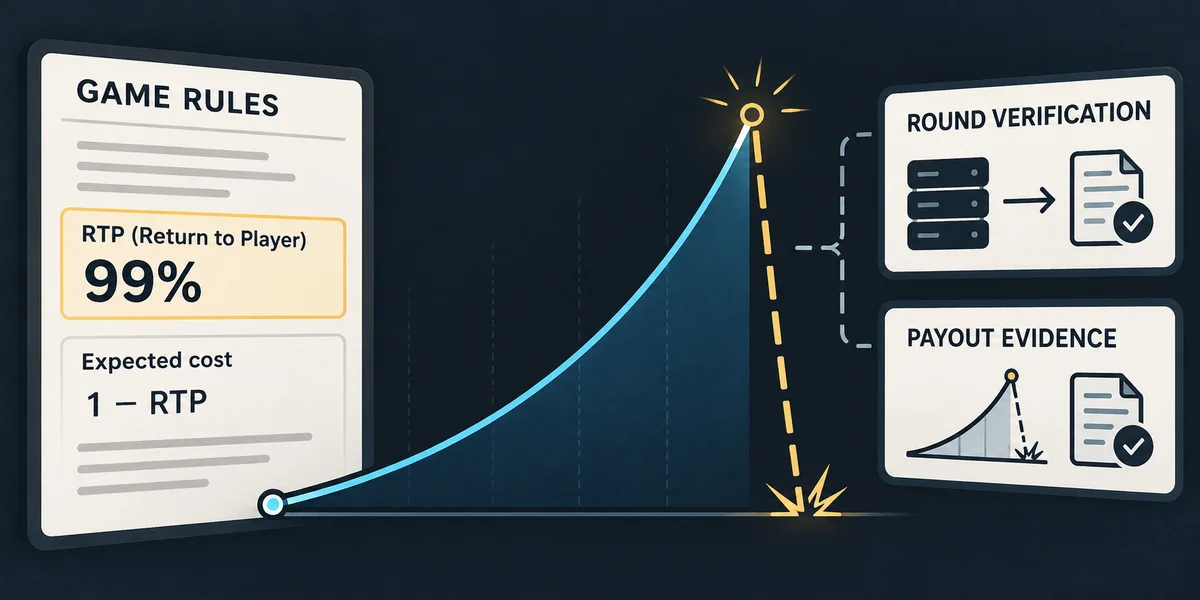
Stake Crash: Published 99% RTP, Expected Cost and Verification Scope
Compare Stake Crash’s published 99% RTP with an explicit 3% model at equal turnover. Understand the double-edge formula error, zero constrained Kelly stake and the evidence a real round comparison needs.
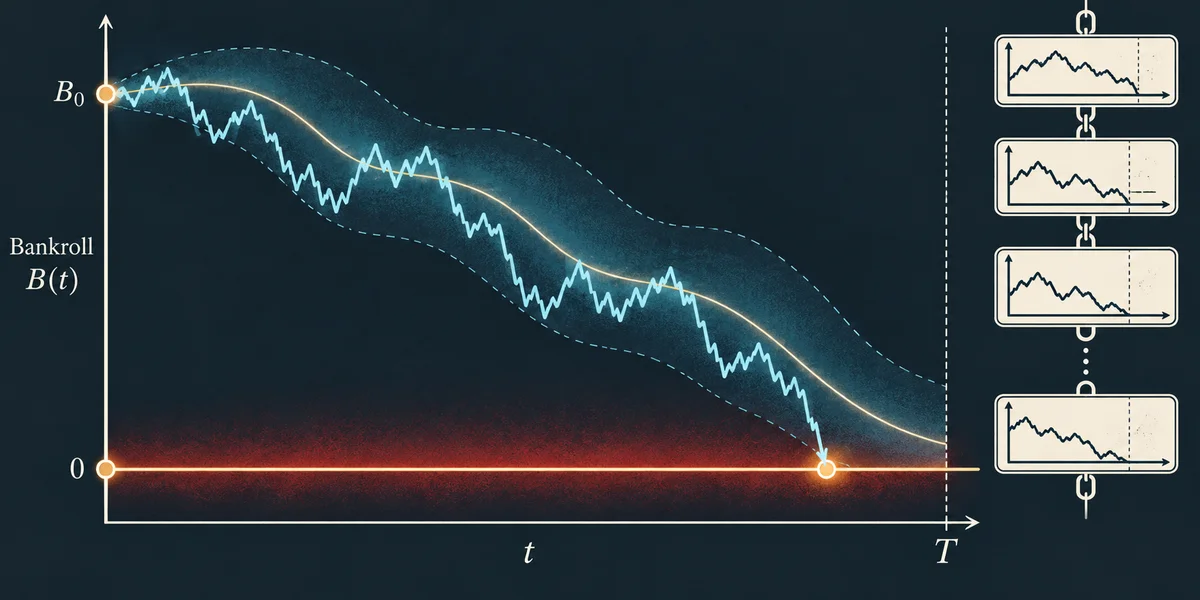
Risk of Ruin: Discrete Boundaries, Brownian Approximation and Verified Ledgers
Define the failure event and stake rule before a ruin probability. Compare exact finite-state risk with a scoped diffusion approximation, reproduce funded ledgers and understand Lundberg’s conditions.
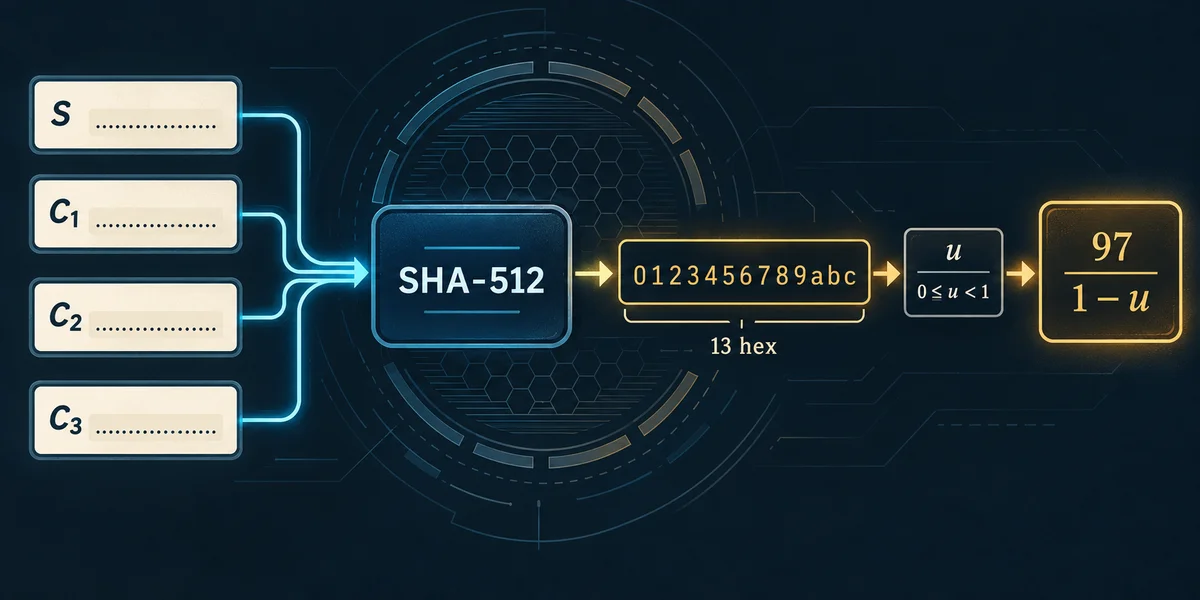
Aviator SHA-512: Calculation, Published RTP and Evidence Limits
Reproduce the 4.62x synthetic Aviator control, understand SPRIBE’s published 97% RTP and derive the declared model. No unsupported production study or payout certification.